Nursery bedding · A practical guide
A Safer Start: Understanding Organic Crib Sleep Surfaces
A thoughtful crib begins with more than a pleasing palette. The mattress, its cover and the layers placed above it all have a part to play in creating a sleep space that is comfortable, practical and easy to care for. When comparing organic crib sleep surfaces, look beyond the label: examine materials, construction, fit, certifications and the manufacturer’s care instructions.
Preparing a nursery invites a particular kind of attention. Small choices—the texture of a sheet, the softness of a blanket folded nearby, the feel of a mattress cover—can seem to carry great significance. Yet for a baby’s sleep space, considered decisions are often the simplest ones. Start with a suitable crib mattress and a securely fitted sheet, then understand what any additional layer is designed to do.
“Organic” can be a useful signpost, but it is not a complete description of a product. Organic crib mattresses and mattress pads may use different fibres, barriers, quilting methods and fastening systems. Their care requirements can vary just as widely. Reading the details helps you distinguish what is certified from what is merely suggested by marketing language—and whether a particular surface suits your household’s needs.
This guide explains the components commonly found in organic crib sleep surfaces, what certifications can and cannot tell you, how fit and construction matter, and how to care for nursery bedding. It is general information, not a substitute for current safe-sleep guidance. For advice about an individual baby or a specific health concern, speak with a qualified healthcare professional.
What counts as a crib sleep surface?
The phrase can describe more than the mattress itself. A crib sleep surface may include the mattress core, its cover, a mattress protector or pad, and the fitted sheet used on top. These elements have different purposes, so it is useful to identify each one rather than treating them as interchangeable.
- Crib mattress: The firm, flat base designed for the particular crib. Its dimensions and construction should be compatible with the cot or crib manufacturer’s specifications.
- Mattress cover: A covering that may be integrated into the mattress or supplied as a separate, removable component. Not every cover is machine washable.
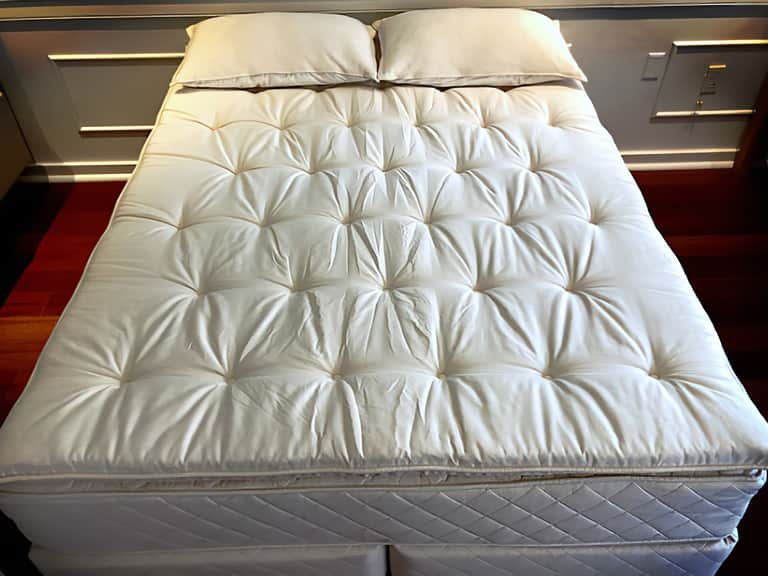
- Mattress pad or protector: An additional layer intended to help shield a mattress from moisture, marks or everyday wear. Products differ in thickness, materials and fastening style.
- Fitted sheet: The layer that covers the sleep surface and should fit the mattress securely, without loose excess fabric.
A pad can be useful in a nursery where regular laundering is part of the routine, but it should not be assumed to be necessary or suitable for every mattress. Check the mattress and crib instructions, as well as the guidance from the relevant UK safe-sleep authority. Avoid adding layers that could compromise a secure fit or alter the intended firmness and flatness of the sleep surface.
Read the materials list, not just the headline
Product descriptions often lead with a fibre—organic cotton, wool or latex, for example—but a sleep surface can contain several materials. A cotton outer fabric does not necessarily mean the entire product is cotton. A pad might combine a cotton shell with a different fill, stitching thread, elastic or a waterproof membrane. These details affect feel, care and performance.
Cotton: familiar, versatile and care-dependent
Cotton is widely used for covers, sheets and quilted pads. It can feel soft against the skin and is available in a range of weaves and weights. Organic cotton refers to the way the cotton fibre is grown and processed under the relevant certification scheme; it does not, by itself, describe the whole finished product. Look for the exact component covered by a claim and the certification attached to it.
Care depends on the weave, quilting and any attached barrier. Cotton may shrink, particularly when exposed to high heat, so follow the label rather than relying on a general rule. A pad that fits before its first wash may fit differently afterwards if the maker advises pre-washing or anticipates shrinkage.
Wool: a natural fill with particular washing needs
Wool is used in some mattress pads and mattress constructions. Its fibre structure can help manage moisture and temperature, though a product’s overall feel depends on the amount of wool, how it is quilted and what surrounds it. Wool is not automatically washable: some filled products require spot cleaning, airing or specialist care, while others are designed for machine washing.
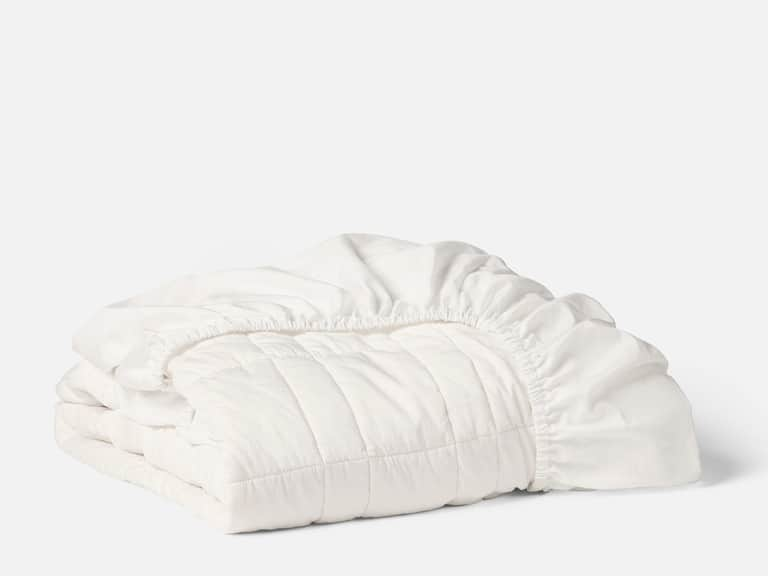
For instance, the Washable Wool Filled Mattress Pad is described as having a fill of 85% NATIVA wool and 15% plant-based batting, with a 100% organic cotton shell. Its washable design may appeal to households looking for a wool-filled layer with a stated machine-care option. Before using any pad in a crib, however, confirm that its dimensions, construction and intended use are appropriate for the specific crib mattress and follow current infant safe-sleep guidance.
Latex and other mattress-core materials
Latex is generally discussed as a mattress material rather than a thin, removable crib pad. If you are comparing a latex-containing mattress, check which layers contain latex, whether the product is certified, and how the cover is cleaned. Natural-origin language and organic certification are not synonyms: a material’s source, processing and finished-product certification are separate questions.
Waterproof barriers and layered fabrics
Some protectors combine a textile surface with a thin waterproof layer. The barrier may sit between fabric layers, and its composition can differ from one product to another. Ask what the barrier is made of, whether the product is described as breathable or waterproof, and whether those claims apply to the entire surface or only certain components. Also confirm whether washing and drying instructions preserve the barrier’s function.
What do certifications tell you?
Certifications can make product comparisons more transparent, particularly when a label identifies a recognised standard and the certified scope. For example, GOTS—the Global Organic Textile Standard—sets requirements covering organic fibres and specified environmental and social criteria along parts of the textile supply chain. The exact certificate and product scope matter: a claim may refer to a particular textile component rather than every part of the finished mattress or pad.
When a product says “GOTS certified,” check the supporting information. Is the finished product certified, or is a material described as certified? Does the listing provide a certificate number, a licensed supplier or a clear account of the components covered? If the information is not easy to find, ask the maker for clarification.
Other standards may address different aspects of production or testing. They are not interchangeable, and a certification should not be read as a guarantee of a specific sleep outcome or as proof that a product is suitable for every baby. A useful label answers a defined question; it does not replace checking fit, construction, use instructions or safety advice.
- Identify the standard by its full name rather than relying on a vague “eco” or “natural” claim.
- Check whether the certification applies to fibres, fabric, a component or the finished article.
- Look for current documentation and confirm that it refers to the product you are considering.
- Treat claims such as “chemical-free” cautiously; ask what substances or tests the wording actually refers to.
Construction and fit: the practical essentials
A well-chosen material cannot compensate for a poor fit. Before purchasing any crib mattress or additional bedding layer, check the crib manufacturer’s stated mattress dimensions and permitted thickness. Measure the mattress if needed, and compare those measurements with the product specifications rather than relying on a broad size name alone.
Pay attention to the pad’s attachment method. Elasticated corners, a fitted skirt or straps can be designed for different mattress depths and shapes. The product should sit smoothly and stay put as intended. If it shifts, bunches, leaves loose material or prevents the sheet from fitting securely, stop using it and consult the product maker or crib guidance.
Quilting and fill influence the pad’s surface. A quilted layer may add softness or absorbency, but thickness and construction are important in a baby’s sleep space. Do not assume that a plush or cushioned layer is appropriate simply because it is marketed as comfortable. Follow current safe-sleep recommendations, which commonly emphasise a firm, flat sleep surface with correctly fitted bedding.
Inspect seams, edges, elastic and closures when the item arrives and periodically during use. Discontinue use if the pad is damaged, the elastic has lost its grip, seams have opened or the waterproof layer has begun to peel. A product that no longer stays securely in place is not serving its practical purpose.
Care that supports a cleaner nursery
Care labels are not fine print to set aside for later; they are part of the product’s design. Washing too hot, using bleach or tumble-drying at an unapproved temperature may shrink fabric, weaken elastic, damage waterproofing or alter a wool fill. A washable product is only convenient if the recommended cycle and drying method work for your household.
- Read the instructions before first use. Check whether pre-washing is recommended and whether the item needs to be washed separately.
- Use the stated temperature and cycle. Follow directions for detergent, spin speed and any restrictions on bleach or fabric softener.
- Dry it as directed. Air-drying, low-heat tumble drying and flat drying are not interchangeable; use the method specified for that product.
- Make sure it is fully dry. Allow bedding to dry completely before putting it back on the mattress.
- Check the fit after laundering. Shrinkage or changes to elastic can affect how a pad sits beneath a fitted sheet.
If a mattress itself becomes wet, use the manufacturer’s care instructions rather than soaking or washing components that are not designed to be laundered. Some mattress covers are removable but not machine washable; others should not be unzipped at all. When in doubt, contact the manufacturer and avoid improvised cleaning methods that could damage the product.
Allergies, sensitivities and careful claims
Parents may look for organic crib sleep surfaces because they want to understand the fibres and finishes in close contact with a baby. That is a reasonable point of comparison, but “hypoallergenic” is not a universal promise that a product cannot cause a reaction. Sensitivities vary, and the term may be used differently across product descriptions.
For a clearer assessment, review the full materials list, the care instructions and any relevant certification or testing information. If your baby has a diagnosed allergy, eczema or another health concern, ask a healthcare professional whether particular materials or laundering practices should be considered. Do not rely on marketing language as medical advice.
Regular laundering of washable bedding can help keep it fresh, but cleaning frequency should reflect the product’s instructions and the household’s needs. Excessive washing may also shorten a pad’s life. A calm, repeatable routine—paired with secure fit and prompt attention to spills—is often more useful than dramatic claims about a “perfect” nursery environment.
A note on safe sleep
Material choices should sit within, not replace, safe-sleep guidance. In the UK, parents and carers can consult the NHS and The Lullaby Trust for current advice on creating a safer sleep space. Guidance may be updated, so refer to the latest recommendations rather than relying on an old checklist or product description.
In general, use a suitable, firm and flat mattress that fits the crib, with a correctly fitted sheet and no loose or unnecessary items in the sleep space. Never assume that a product is safe for a baby solely because it is organic, breathable, natural or certified. If the crib or mattress instructions conflict with general advice, seek clarification from an appropriate healthcare professional or the manufacturer before use.
This article is an educational overview and does not assess any particular sleep product for infant safety. Product suitability depends on the specific design, the crib, the baby’s circumstances and current guidance.
How to compare organic crib sleep surfaces
A short checklist can bring order to a sea of similar-sounding claims. Keep the product description and crib specifications side by side, then consider each question in turn:
- What is the core mattress made from, and what materials are used in its cover?
- Is the pad a comfort layer, a moisture protector, or both?
- Which parts are organic or certified, and what documentation supports that description?
- Does the maker state the mattress dimensions, pad dimensions and compatible mattress depth?
- How does the pad attach, and will it remain smooth and secure under the fitted sheet?
- What are the exact washing and drying instructions?
- Can the item be used with the particular crib and mattress without conflicting with their instructions?
- What happens if the surface is damaged, shrinks or no longer fits securely?
Comparing products this way moves the decision away from atmosphere and towards useful detail. A soft finish or beautifully worded description may catch the eye; specifications and care guidance are what help establish whether the item is practical.
Common misconceptions, clarified
“Organic” means every component is organic.
Not necessarily. A product can combine certified fibres with non-organic components. Check the scope of the claim and the materials list.
A mattress pad and a protector are the same thing.
The terms are often used loosely, but products can differ in purpose. Some focus on a quilted or cushioned feel, some on moisture protection, and some combine features. Read the construction details rather than relying on the name.
Natural materials never need special care.
Natural fibres can have specific washing and drying requirements. Wool, cotton and latex are not cared for in the same way, and a blended or laminated product adds further considerations.
A certified product automatically meets every nursery need.
Certification can help explain material standards, but it does not confirm that a product fits a particular crib, is compatible with every mattress or meets every family’s practical requirements.
The considered nursery
The most reassuring nursery is not necessarily the one with the longest list of special materials. It is the one where each item has a clear purpose, fits correctly and can be cared for as intended. An organic crib sleep surface may offer welcome clarity about fibres and sourcing, but the details matter more than the shorthand on a label.
Begin with the crib and mattress specifications. Compare materials and certifications with a discerning eye, then check the pad’s construction, fit and laundering requirements. Finally, consult current UK safe-sleep advice and follow the instructions supplied with the mattress and crib. In a room designed for a small new arrival, good judgement is a quiet luxury—and often the most useful one.
At a glance
- Look beyond “organic” to identify every material and component.
- Check exactly what a certification covers.
- Match mattress and pad dimensions to the crib manufacturer’s specifications.
- Choose only layers that remain secure and are appropriate for the intended sleep space.
- Follow the item’s care label, including drying instructions, and inspect fit after washing.
- Use current NHS or The Lullaby Trust advice for safe-sleep guidance.