Bedding guide · Crib care
Naturepedic Crib Bedding: Choosing a Secure, Washable Sleep Layer
A crib mattress pad may look like a small detail in a nursery, but its fit, construction and care can shape the everyday experience of keeping a baby’s sleep space clean. The right layer should sit securely and flat beneath a correctly sized fitted sheet—without changing the firm, level surface recommended for infant sleep.
Published 3 November 2026
In a well-considered nursery, practicality can be quietly elegant. A fresh sheet, a precisely fitted mattress and a thoughtfully chosen protective layer are not decorative flourishes; they are the foundations of a sleep space that is easier to maintain. When choosing crib bedding, the most important qualities are not a lofty feel or a promise of extra comfort. They are a secure fit, a flat surface, materials suited to the intended use and care instructions that can be followed consistently.
Naturepedic’s organic cotton crib mattress pads offer a useful example of two common approaches to protection: a fitted design with elastic around the edge and a flat pad intended to be layered beneath a crib sheet. The specific choice should always be guided by the product’s instructions, the mattress dimensions and current safe-sleep guidance. A label such as “organic” describes aspects of materials or production; it does not, on its own, establish that a product is suitable for every crib or sleeping arrangement.
Start with the sleep surface, not the styling
For an infant, the sleep surface should remain firm, flat and level. In the UK, the NHS and The Lullaby Trust advise placing babies on their backs to sleep in a clear cot or crib, on a firm, flat mattress with a well-fitting waterproof cover and sheet. Keep soft items—including pillows, duvets, cot bumpers and loose bedding—out of the sleep space. A mattress pad should never be used to make a surface softer or to add cushioning around a baby.
This distinction matters because “pad” can describe products with quite different thicknesses and constructions. Some are slim protective layers; others are quilted or cushioned. For a crib, do not assume that a product is appropriate simply because it is marketed as bedding, labelled natural or described as comfortable. Check the manufacturer’s intended use and ensure that the assembled sleep surface remains firm, flat and compatible with the cot mattress. If the product instructions and safe-sleep advice appear to conflict, do not use the product until you have checked with the manufacturer or an appropriate health professional.
Before buying, confirm that the crib, mattress, pad and fitted sheet are designed to work together. A protector that bunches, shifts, curls at the corners or creates an uneven surface is not a good fit. Nor should a pad be used to fill gaps between a mattress and the sides of a crib. The mattress itself must fit the crib properly; a pad cannot correct a mismatch.
Fitted or flat: understand the difference
Crib mattress pads generally fall into two broad styles. A fitted pad has elasticated sides or a skirt that stretches around the mattress. A flat pad lies on top of the mattress and is held in place by the fitted sheet above it. Neither style should be selected by appearance alone: the decisive questions are whether the product is intended for the particular crib mattress, whether it stays flat and secure, and whether the maker’s directions allow it to be used under the sheet.
The fitted style
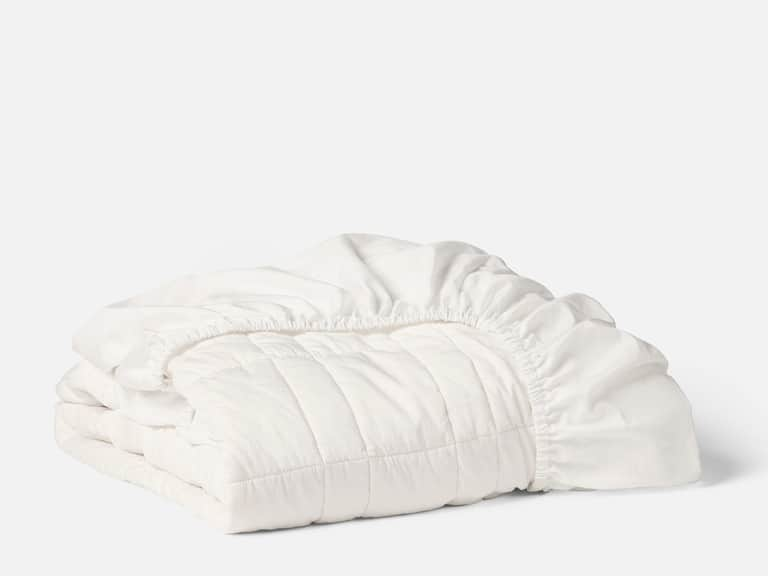
A fitted mattress pad is designed to grip the mattress around its edges. Naturepedic’s fitted organic cotton crib option is described as having elastic all the way around for a snug fit. That construction may make placement straightforward, but it still needs to match the mattress dimensions and depth. Stretchy fabric can accommodate some variation, yet stretch is not a substitute for correct sizing.
When fitting a pad, smooth it evenly and inspect the perimeter. The elastic should sit where intended, without riding up or pulling the surface into ridges. Check all corners and sides after laundering, since fabric may change slightly with repeated washing and drying. If the pad no longer holds securely, or if it visibly gathers beneath the sheet, discontinue use until you can confirm that the fit remains appropriate.
The flat style
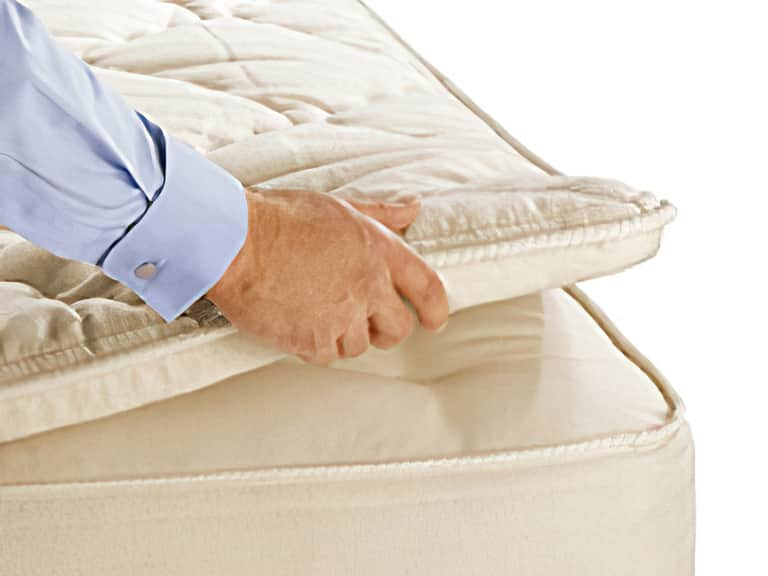
A flat pad can be simpler in construction and may be useful where the manufacturer specifically recommends layering it beneath a fitted sheet. Naturepedic’s flat organic cotton crib pad is described as having cotton flannel on the upper side, cotton muslin on the underside and a thin waterproof inner layer. The product information says it can be layered under a crib sheet. Follow those directions exactly: the flat pad should remain fully covered, smooth and in place, not exposed as a loose surface or folded to create extra thickness.
With either design, the sheet on top must itself fit the mattress securely. A fitted sheet that is too large, loose or stretched out can undermine the careful fit of the layers below. After making the bed, run a hand over the surface to check for folds, bunching or raised edges. Recheck whenever bedding is changed.
Measure before you choose
Crib and cot sizes vary by country and product, and terminology can be confusing when shopping across borders. The Naturepedic examples described in the product information measure 28 by 52 inches, a size associated with standard US crib mattresses. That measurement should not be assumed to match a UK cot mattress. Do not rely on a generic “standard” label when dimensions are available; compare the stated length, width and intended mattress depth with the actual mattress and crib documentation.
Measure the mattress itself rather than guessing from the outside of the cot. Note its length, width and depth, and check the crib or cot manufacturer’s instructions for compatible mattress specifications. Then compare those measurements with the pad’s product details. If a product is described as fitted, look for guidance on mattress depth and the construction of the elasticated edge. If dimensions are absent or unclear, seek clarification before use.
- Check the exact measurements: compare the pad’s stated dimensions with the mattress, not just the crib frame.
- Confirm the intended market: imported products may use US crib sizing rather than UK cot sizing.
- Consider mattress depth: fitted designs need enough depth to stay in position without excessive tension.
- Inspect the assembled bed: the mattress, pad and sheet should lie flat, without loose fabric or visible bunching.
Materials: what organic cotton does—and does not—tell you
Organic cotton is often chosen for its natural fibre content and familiar feel. The Naturepedic crib options described here use organic cotton in their fabric layers, with a thin waterproof membrane in the waterproof designs. One version has a cotton flannel top and cotton muslin underside; the fitted version adds elastic around the perimeter. This makes the product details more informative than a broad label alone: they explain which materials touch the sheet, how the pad is shaped and what provides the moisture barrier.
For parents comparing crib bedding, material information can help answer practical questions: Is the surface woven or brushed? Does the product contain a waterproof layer? Is that layer described as part of the construction rather than as a separate coating? What does the maker say about breathability, washing and drying? Avoid treating marketing terms as a substitute for the full specification. If a material claim is important to your decision, look for the relevant certification and verify what it covers.
Likewise, “hypoallergenic” should not be read as a guarantee that a baby will never react to a product. Sensitivities are individual, and a textile claim does not replace advice from a health professional where a child has a known allergy or skin condition. For a baby with specific medical needs, discuss suitable bedding with the clinician who knows their circumstances.
Waterproof protection and everyday cleanliness
A waterproof layer can help prevent liquid from passing through to the mattress. That may make routine clean-up more manageable, especially during the early months when bedding is changed frequently. The Naturepedic flat and fitted examples are described as having a thin inner waterproof layer between outer cotton layers. The product information also states that the layer helps block dust mites. These are product descriptions, not a reason to alter safe-sleep arrangements or to use additional layers beyond the manufacturer’s instructions.
More protection is not automatically better. Adding several pads, towels or improvised barriers can create an uneven or less secure surface. Use only the layers specified by the crib, mattress and pad manufacturers, and keep the top fitted sheet tight and correctly sized. If an accident occurs, remove and launder the bedding as directed, then check that all layers are fully dry, smooth and undamaged before remaking the crib.
Washability is a design feature
In baby bedding, a washable product is only convenient when its care instructions are clear and manageable. The Naturepedic crib pad descriptions state that the pads can be machine washed and dried. Before the first wash, read the care label on the item you own; instructions may differ by style, production run or market. Follow the label rather than relying on a general product summary, and do not assume that every waterproof membrane can tolerate the same temperature or drying method.
Use the recommended cycle and temperature, and select detergent and drying settings in line with the manufacturer’s directions. Avoid bleach, fabric softener or high heat unless the care label explicitly permits them. Such treatments can affect fibres, elastic and waterproof components. If the label calls for line drying or low-temperature tumble drying, that is part of caring for the product’s construction—not an optional finishing touch.
After laundering, inspect the pad before putting it back on the mattress. Look for split seams, weakened elastic, holes, peeling or cracking in a waterproof layer, and any persistent odour or dampness. A damaged or poorly fitting pad should not be kept in service simply because it is still washable. Keep a spare correctly sized fitted sheet available so the sleep surface can be remade promptly while bedding is in the wash.
A practical fitting and care routine
A short, consistent check can make crib bedding easier to manage. When you first receive a pad, verify its size and construction against the packaging and the manufacturer’s product details. Wash it if directed to do so before first use. Then make the crib according to the instructions for the pad and mattress, ensuring the top sheet is fitted and the surface remains flat.
- Read the crib, mattress and pad instructions before assembling the layers.
- Confirm that the pad is intended for the mattress size and depth.
- Place the pad in the prescribed position and smooth it completely.
- Cover it with a correctly sized fitted sheet, secured at every corner.
- Check that the mattress remains firm and level, with no folds, gaps or loose material.
- Follow the care label after spills and routine laundry; inspect the pad once dry.
When to replace a crib pad
There is no universal replacement schedule that applies to every pad. Condition and fit are more useful guides than age alone. Replace or stop using a pad if its elastic has stretched, the fabric is torn, seams have opened, the waterproof layer is compromised, or the product no longer lies smoothly beneath the sheet. A pad that has shrunk enough to pull tight or become difficult to fit should also be reassessed.
Keep the product label or care information where it can be found, especially if bedding will be used by more than one caregiver. If the pad has been handed down, inspect it carefully and confirm that its instructions and condition are still clear. Do not use a damaged product simply because its original materials or certifications were appealing.
Common misconceptions, clarified
- “Organic means suitable for any crib.” No. Material credentials do not confirm size, fit or suitability for a particular mattress.
- “A thicker pad will make the bed more comfortable.” Extra cushioning is not the goal for an infant sleep surface. Keep it firm, flat and level.
- “A waterproof layer can be used on top of the sheet.” Use the product only as directed. The Naturepedic examples described here are intended to sit beneath a fitted sheet.
- “One standard size fits all.” Sizes vary, particularly between UK and US products. Check measurements directly.
- “Machine washable means any wash cycle is fine.” Follow the specific care label to help preserve the fabric, elastic and waterproof layer.
A considered choice for a calm nursery
The best crib bedding choice is often the least complicated one: a properly sized pad, used exactly as intended, beneath a securely fitted sheet on a firm, flat mattress. Naturepedic’s fitted and flat organic cotton crib pads illustrate how details such as elastic construction, a thin waterproof layer and machine-washable care can shape everyday use. But those features matter only when the product fits the actual mattress and its instructions align with the crib’s requirements.
Before purchasing, confirm dimensions, material layers and care directions; after fitting, check that everything stays smooth and secure. Keep the crib clear of additional soft items, and consult current NHS or The Lullaby Trust guidance if you are unsure about safe sleep. A well-chosen washable layer should make maintenance simpler—not change the essential character of the baby’s sleep surface.
Frequently asked questions
Can a crib mattress pad go under a fitted sheet?
Some are designed for that arrangement. Follow the specific manufacturer’s instructions, and make sure the pad is intended for the mattress, lies flat and does not interfere with the fitted sheet. The sheet should fit securely over the complete surface.
Is a flat crib pad as secure as a fitted one?
They use different constructions. A fitted pad grips the mattress with elastic; a flat pad is held beneath the fitted sheet. Use either only according to its instructions, and check that it remains smooth and in place. Do not improvise by folding or layering it.
Are Naturepedic crib pads suitable for a UK cot?
Do not assume so based on the brand or the phrase “crib mattress pad.” The examples described here measure 28 by 52 inches, so compare the stated dimensions with the cot mattress and check compatibility with the cot manufacturer. If the measurements do not match, do not use the pad.
How often should a crib pad be washed?
Follow the product care label and wash it when soiled or when routine care calls for it. After every wash, allow it to dry completely and inspect its fit, elastic, seams and waterproof layer before use.
Does organic cotton make a sleep surface safer?
Organic cotton describes fibre sourcing and production standards; it does not, by itself, establish safe fit or suitability. For infant sleep, the surface must remain firm, flat and level, and the crib should be kept clear of loose bedding and soft objects.
This article is general bedding information, not medical advice. For guidance tailored to your baby or circumstances, speak with a qualified health professional and consult current UK safe-sleep recommendations.