Bedding · Materials Guide
Wool, Silk or Cotton? Understanding Natural Fibres in Bedding Layers
A bedding layer can change the character of a bed without changing the mattress itself. Wool, silk and cotton each bring a different balance of warmth, moisture handling, touch and care. Here’s how to understand their qualities—and decide which belongs in your sleep routine.
There is an understated pleasure in a bed that feels right: the sheet cool against the skin, the duvet neither too heavy nor too slight, the mattress offering just enough softness. Often, that comfort is not the work of one material, but of several layers working together. A mattress pad or topper can add cushioning, a protector can help shield the mattress, and sheets provide the most immediate contact with the body.
Among the fibres used in these layers, wool, silk and cotton have endured for good reason. They are not interchangeable, however, nor does the word “natural” guarantee that a particular item will be breathable, easy to wash or suitable for every sleeper. The construction matters: a cotton cover may enclose a different filling, while a wool-filled topper behaves differently from a fine wool blanket. Weave, quilting, density and the care label all shape the experience.
This guide looks at the practical distinctions between wool bedding, silk bedding and cotton bedding. Rather than declaring a universal winner, it explores what each fibre tends to do well, where its limits may lie and how to choose a layer that suits your preferences and household routine.
First, understand the layer
Before comparing fibres, it helps to distinguish the items they make. A mattress pad is usually a relatively thin, often quilted layer that adds a little cushioning and may help protect the mattress from everyday wear. A mattress protector is primarily designed as a barrier against spills, perspiration or other forms of soiling; some are padded, while others are deliberately slim. A mattress topper is generally thicker and more likely to noticeably alter the feel of the bed.
The names are not always used consistently by manufacturers, so look beyond the product title. Check the filling, surface fabric, construction, depth, fit and stated purpose. If you want to change the feel of a firm mattress, a thin cotton pad may make only a subtle difference; a lofty wool topper may add more cushioning. If spill protection is the priority, a natural-fibre cover on its own should not be assumed to provide a waterproof barrier.
Think of the bed as a small textile wardrobe. Each piece has a role, and the best combination depends on what you need from it: softness, a smoother surface, added warmth, easier upkeep or a protective layer between the sleeper and mattress.
Wool: warmth with a considered feel
Wool is often chosen for its insulating character and ability to manage moisture within a bedding layer. Its fibres can hold air, which helps create a feeling of warmth, while wool is also commonly valued for absorbing and releasing moisture. In practice, how warm or comfortable a wool item feels depends on its thickness, density, the surrounding bedding and the room—not simply on the fibre name.
For someone who likes a cushioned, gently insulating surface, wool can be an appealing choice. A wool-filled pad or topper may feel more substantial than a light cotton layer, without necessarily having the sinking sensation associated with some foam products. It can also suit people who prefer natural materials and are willing to follow the care requirements that come with them.
Wool’s reputation for temperature regulation should be understood as a useful material characteristic, not a promise that it will keep every sleeper cool or warm. People experience temperature differently. A thick duvet, a warm bedroom, nightwear and personal preference all influence comfort. If you tend to overheat, consider the entire bedding arrangement and look for a layer whose weight and construction are appropriate for the season.
Care can be the deciding factor. Some wool bedding is machine washable, but other items require dry cleaning or specialist handling. Even washable wool may need a cool, gentle cycle and careful drying. Heat, vigorous agitation and unsuitable detergents can damage fibres or affect the fill. Read the label before buying, and consider whether the required routine fits your household.
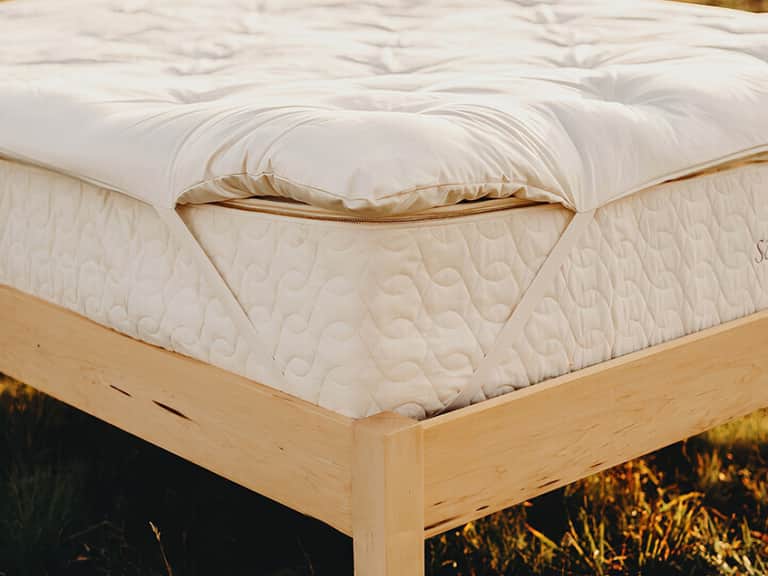
As one example of a wool-filled layer, the Savvy Rest Natural Savvy Woolsy Mattress Topper is described as having a wool fill inside a quilted organic cotton cover, with corner straps and a stated height of approximately three inches. That construction illustrates the distinction between the filling and the fabric that encases it: both contribute to the feel and the care of the finished item. Its manufacturer recommends adding a mattress pad to protect the topper and mattress from stains and perspiration, so it is worth considering how the layers will work together.
Wool may be less suitable if you need a bedding layer that can be routinely washed at home but the specific item is dry-clean only, or if you dislike its natural texture or scent. If you have a wool sensitivity, do not assume that a cover will make an item comfortable; check the construction and seek advice if you are unsure.
Silk: lightness and a smooth hand
Silk brings a different mood to bedding. It is prized for its smooth feel and lightness, making it an attractive option for people who want a refined layer without the dense, lofty sensation of a heavier fill. Depending on the construction, silk may appear as a surface fabric, a filling, or both. Those distinctions matter: a silk cover does not necessarily mean a silk-filled pad, and the two can feel quite different.
Silk bedding is often associated with a gentle, fluid drape. In a mattress layer, the result depends on how much silk is used, how it is quilted and what lies beneath it. A slim silk-filled pad may add a soft buffer rather than dramatic support. Anyone looking for a major change in mattress firmness should check the item’s thickness and description carefully instead of relying on the fibre name.
Silk’s light touch can be appealing in bedrooms where a bulky layer feels excessive. But it is not automatically the simplest choice for everyday care. Instructions vary, and some silk-filled products require dry cleaning or other specialist treatment. Avoid assuming that a fibre’s delicacy or luxury positioning tells you exactly how to maintain it: the maker’s care label is the authority for that particular item.
When comparing silk bedding, check whether the product is made from silk fibre throughout or combines silk with other materials. Look at the outer fabric, fill, fastening or skirt, and washing instructions. If you have allergies or sensitive skin, review the full materials list rather than relying on broad claims such as “hypoallergenic.” Sensitivity is individual, and the finished product may contain components beyond the headline fibre.
Silk can be a thoughtful choice for someone who values a light, smooth feel and is comfortable with the care routine involved. It may be less convenient for a busy household that needs frequent machine washing, or for anyone seeking a pronounced, plush change in the bed’s support. In that sense, silk is often a question of touch and maintenance as much as temperature.
Cotton: familiar, versatile and easy to understand
Cotton is one of the most familiar fibres in bedding, found in sheets, covers, quilted pads and fillings. Its appeal lies in versatility: it can be woven into crisp percale, smooth sateen or textured flannel, and it is used in both lightweight and more substantial constructions. Cotton’s everyday familiarity can make it a straightforward starting point for people who want a breathable-feeling, uncomplicated layer.
Not all cotton bedding feels the same. Percale generally has a crisp, matte hand; sateen tends to feel smoother and can have a subtle sheen; flannel is brushed for a softer, warmer surface. These are descriptions of fabric construction and finish, not simple measures of quality. Thread count alone is also not a complete guide to comfort: fibre quality, yarn, weave and finishing all matter.
Cotton appears as both outer fabric and fill. A cotton cover over a synthetic fill will not perform exactly like a pad made entirely from cotton, and neither can be judged by the word “cotton” alone. If you want a particular feel, check which parts of the product contain cotton and what the remaining materials are. This is especially important when comparing items marketed as natural or organic.
Many cotton pads are machine washable, which can make them practical for regular household use, but the exact instructions vary. A quilted item may need a gentle cycle, a particular water temperature or low-heat drying. Large bedding can also strain a small washing machine. Allow enough room for the item to move freely, and follow the label rather than improvising with high heat or harsh products.
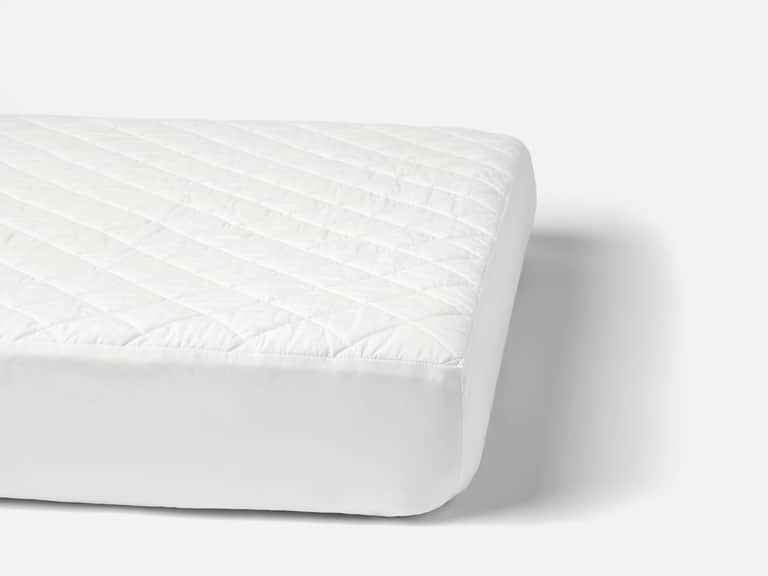
For example, the Organic Cotton Mattress Pad is described as having organic cotton batting and a percale cotton cover, with full elastic around the bottom and a stated 15-inch pocket depth. Its care directions specify a cold, gentle wash and low tumble drying. It provides a useful illustration of how a cotton layer can combine a particular surface weave with a separate cotton filling, while the fit and care details remain essential parts of the decision.
Cotton may suit people seeking a familiar, relatively easy-to-care-for material, particularly when the selected item is machine washable. It may be less appealing if you want the lofty insulation of a thick wool layer or the distinctly smooth, light sensation associated with silk. As ever, the thickness and construction can alter the experience as much as the fibre itself.
At a glance: how the fibres compare
| Fibre | Often valued for | Consider before choosing |
|---|---|---|
| Wool | Insulating comfort, moisture management and a more substantial feel in many filled layers | Warmth varies by construction; care may be specialist or gentle, and natural texture or scent may not suit everyone |
| Silk | A smooth hand, lightness and a refined, less bulky feel | Check whether silk is the cover, filling or both; care instructions can be demanding |
| Cotton | Familiar softness, varied weaves and practical options for everyday bedding | Feel depends on weave and fill; machine-washable claims and drying instructions vary by item |
This comparison is a starting point, not a performance ranking. A dense cotton pad may feel warmer than a thin wool layer; a silk item with a substantial filling may feel more cushioned than its light reputation suggests. Product construction, thickness and bedroom conditions all shape the final result.
How to choose for your sleep preferences
Begin with the problem you want the bedding layer to solve. If the mattress feels slightly too firm, look for a pad or topper with enough fill and loft to make a noticeable difference. If the aim is to protect the mattress, prioritise the stated protective function and fit rather than selecting a fibre on the basis of softness alone. For a cooler-feeling surface, consider weave, thickness and the rest of your bedding—not just whether the label says cotton, wool or silk.
- If you want a little cushioning: compare fill, quilting and finished thickness. A thin protective pad is unlikely to transform a mattress.
- If you want a lighter layer: examine the weight and construction of silk or cotton options, and check that the item is not more heavily filled than you prefer.
- If you want an insulating feel: wool may be worth considering, especially in a layer designed to add loft. Match it to the duvet and room temperature you already use.
- If easy laundry is essential: filter by the specific care label. Do not assume that every cotton item is machine washable or that every wool item needs dry cleaning.
- If you have sensitivities: review the complete materials list, dyes and finishes, and wash new bedding according to its instructions before use if appropriate.
- If the mattress is unusually deep: measure it, including any existing topper, and compare the result with the item’s pocket depth or fit guidance.
It is also worth thinking about who uses the bed and how often the layer will need washing. A guest-room mattress may have different demands from a family bed used every night. A child’s bedding needs a secure, appropriate fit and straightforward care. In a cot, follow current safe-sleep guidance and use only bedding that fits the mattress as intended; do not add loose or bulky layers that are not recommended for the child’s age and sleep setting.
Fit, layering and the details that make a difference
A beautiful fibre cannot compensate for a poor fit. A pad that shifts, bunches or pulls at the corners can disturb the smooth surface of the bed and may be uncomfortable. Check the mattress dimensions and depth, then look for the product’s fastening method: elasticated corners, a fitted skirt, corner straps or another design. If you use a topper beneath the pad, include its added height when assessing fit.
Layering should be considered as a system. A mattress protector may sit closest to the mattress, with a comfort layer above it and a fitted sheet over the top, but the correct order depends on the products’ instructions. Waterproof membranes can affect the feel of a bed, while a thick pad may change how a fitted sheet sits. If you are combining several layers, confirm that the sheet can accommodate the total depth without coming loose.
For people shopping in the UK, sizes and product terminology deserve particular attention. A brand may provide UK, European or North American dimensions, and similarly named sizes are not always identical. Measure your mattress in centimetres and compare those figures with the manufacturer’s stated dimensions rather than relying on the size label alone.
Care that preserves the feel
Good care begins before the first night. Read the label, note whether the item can be washed at home and check any restrictions on temperature, detergent, spinning and drying. Keep the instructions accessible; a natural-fibre product is not necessarily low-maintenance, and the wrong cleaning method can affect the fill, shape or surface.
When machine washing is permitted, make sure the drum has enough room for the item to move. Use only the cycle and products recommended by the maker. Avoid bleach, fabric softener or high-heat drying unless the instructions explicitly allow them. Some fills need careful redistribution after washing; others may be unsuitable for machine drying altogether. If a pad is too large for your machine, a suitable larger-capacity laundry service may be preferable to forcing it into a small drum.
Routine airing can help bedding feel fresher between washes, but it is not a substitute for cleaning when the item is soiled. Follow the care label and address spills promptly in the way recommended by the manufacturer. For wool or silk items with specialist cleaning requirements, do not experiment with a home remedy on an inconspicuous-looking corner; a delicate construction can still be damaged.
Regularly check that a fitted layer remains smooth and secure. Look for persistent bunching, flattened or uneven fill, damaged elastic, wear in the fabric or a protective barrier that no longer functions as intended. These signs may indicate that the item needs repair, replacement or a change in how it is used.
Natural does not mean identical—or automatically better
Natural fibres can be appealing for their feel, origin and familiar place in home textiles, but they are not a guarantee of a particular sleep outcome. Comfort is personal, and a material’s performance depends on the finished product. Natural and synthetic fibres may also be blended, used in a backing or included in a waterproof layer. Read the full specification to understand what will actually be against the mattress and sleeper.
Similarly, a term such as “hypoallergenic” should not be treated as a promise that an item will prevent allergies. If you are managing dust-mite sensitivity or another health concern, seek reliable clinical guidance and focus on practical measures recommended for your situation. A washable cover, routine laundering and a suitable protective barrier may form part of a plan, but a bedding label alone cannot diagnose or treat an allergy.
Certifications can help clarify how a product has been assessed, but they apply to particular standards and claims. Check which organisation issued the certification and what it covers: fibre content, processing, environmental criteria or another aspect. A certification is useful context, not a substitute for reading the material composition and care information.
The considered choice
Choose wool if you are drawn to a gently insulating, potentially more substantial layer and are comfortable with the item’s care routine. Choose silk if a light, smooth feel is your priority and you have checked how the specific product should be cleaned. Choose cotton if you value familiarity, a wide range of weaves and the possibility of straightforward everyday care—while still confirming the fill, fit and wash instructions.
There is no need to make the choice more complicated than it is. Start with the sensation you want, identify whether the layer is meant to cushion, protect or do both, and inspect the details that determine daily use. A well-chosen natural-fibre bedding layer should feel at home in your room and in your routine: comfortable to sleep on, sensible to care for and suited to the mattress beneath it.
Ultimately, the best material is not the one with the most persuasive reputation. It is the one whose texture, warmth, fit and upkeep make sense for the way you actually sleep.
Frequently asked questions
Is wool bedding always warmer than cotton?
Not always. Wool is commonly associated with insulation, but warmth depends on thickness, fill, quilting, weave and the other bedding in use. A lightweight wool layer may feel less warm than a thick cotton-filled pad.
Is silk bedding suitable for everyday use?
It can be, provided the specific item suits your needs and you are comfortable with its care requirements. Check whether silk is used as the cover, fill or both, and follow the manufacturer’s cleaning instructions.
Does cotton breathe better than wool or silk?
Breathability is influenced by the fabric weave, fill, thickness and construction, so it is not possible to rank every product by fibre alone. Compare the complete specification and consider the way the bedding feels in your room.
What should I check before buying a mattress pad?
Check its purpose, materials, thickness, dimensions, pocket depth or fastening, care instructions and whether it provides the protection you need. Measure your mattress and account for any other layers that will sit beneath the fitted sheet.